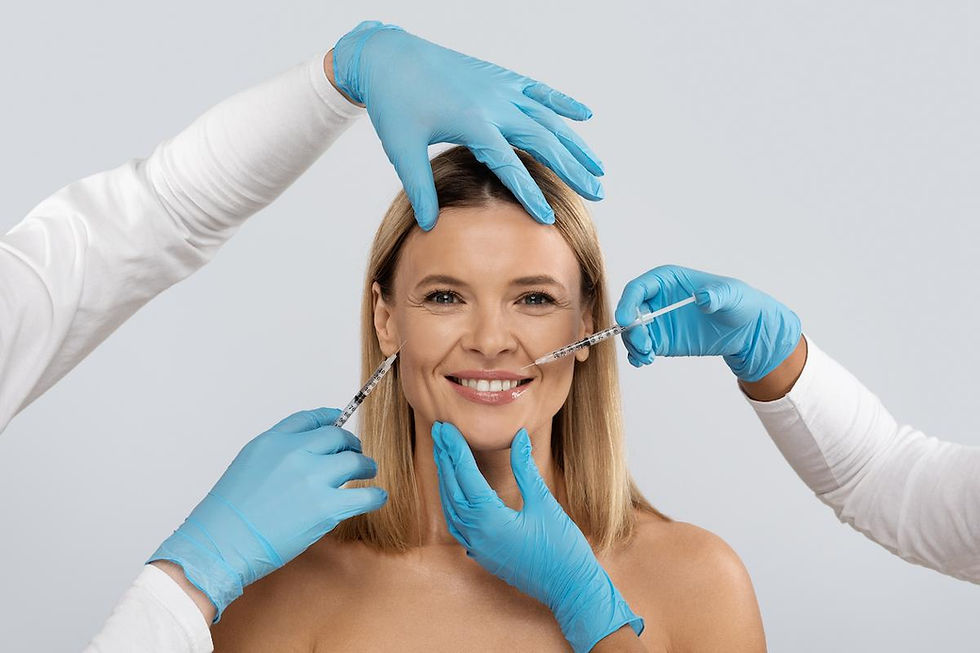
Current Medical Applications of Peptides

Updated: Oct 5
Peptides are short chains of amino acids that play important roles in normal human biology. Some peptide-based medicines are established treatments for specific medical conditions, while many other peptides remain investigational or are used only in research settings. This article explains what peptides are, what current evidence shows, and important questions patients should consider before discussing peptide-based therapies with a qualified physician.
Peptides act as signalling molecules within the body and participate in many biological processes. However, the level of scientific evidence differs considerably between individual peptides. Some peptide medicines have regulations for specific indications, whereas many peptides promoted online have limited human clinical evidence or are not accepted for routine clinical use in many jurisdictions.
This article provides general educational information about peptides. It also explains how a physician-led consultation may assess whether any evidence-based peptide treatment is appropriate for an individual's medical circumstances. It should not be interpreted as medical advice or as a recommendation for any specific peptide.
Medically reviewed by Dr. Ehsan Sotoudeh, MD – General Surgeon & Regenerative Medicine Expert
Last medically reviewed: July 27, 2026

What Are Peptides?
Peptides are short chains of amino acids that serve as the building blocks for proteins in the body. Unlike larger proteins, peptides are smaller and can penetrate the skin or the body's barriers more easily, their biological roles and clinical relevance depend on the individual peptide and the available scientific evidence. Some peptides function as biological signalling molecules. Their clinical applications depend on the individual peptide, available scientific evidence, and regulatory status.
Current Medical Use of Peptide Therapy in Dubai
Peptides are used in a wide range of medical and scientific settings, but it is important to understand that not all peptides have the same level of evidence or regulatory status. While some peptide-based medicines are established treatments for specific medical conditions, many other peptides remain investigational, are used off-label, or continue to be studied in clinical research.
The available evidence also varies considerably between individual peptides. Some have been evaluated in large human clinical trials and are accepted for specific indications by regulatory authorities in certain countries. Others have been studied mainly in laboratory or animal research, with limited high-quality human data available. As a result, findings from one peptide should not be generalized to all peptides.
Patients should also be aware that peptides promoted online for aesthetic, fitness, or longevity purposes may not have the same level of scientific support as accepted peptide medicines. Marketing claims can sometimes exceed the available clinical evidence, making it important to discuss any peptide-based treatment with a qualified physician who can explain the current evidence, potential risks, expected limitations, and whether a particular treatment is appropriate for an individual's medical circumstances.
At EDEN AESTHETICS Clinic, discussions about peptide-based therapies begin with a medical consultation and an individual assessment. Where appropriate, the consultation includes a review of medical history, current medications, treatment goals, and the available scientific evidence for the specific peptide being considered. Recommendations are made on an individual basis and depend on the patient's overall clinical situation rather than on generalized claims or trends.
Peptides vs. Proteins
Because peptides are generally shorter than proteins, they interact differently within biological systems. Their clinical use depends on the individual peptide, its mechanism of action, and the available scientific evidence.
Public Interest in Peptides
Peptides have received increasing attention in recent years, not only within medical research but also in mainstream media and online discussions. Several well-known public figures, including entrepreneur Bryan Johnson, actors Sylvester Stallone and Jennifer Aniston, designer Victoria Beckham, and entrepreneur Gwyneth Paltrow, have been publicly associated with peptide-related products or discussions about peptides in interviews, podcasts, social media, or media reports.
These public references have contributed to growing interest in peptides among patients and consumers. However, it is important to understand that personal experiences, media reports, or celebrity statements do not constitute scientific evidence and should not be interpreted as proof of a regulatory status. In some cases, the specific products or peptides discussed publicly have not been independently verified, and some peptides remain investigational or are subject to different regulatory requirements depending on the jurisdiction.
When considering peptide-based treatments or products, patients should rely on evidence-based medical information, current clinical guidance, and advice from a qualified healthcare professional rather than testimonials, celebrity endorsements, or social media content. Treatment decisions should always be based on an individual's medical circumstances, the available scientific evidence, and the regulatory status of the specific peptide being considered.

In-depth Peptide Profiles
Peptides are an active area of medical and scientific research. Each peptide has a unique amino acid sequence and biological function, and the available scientific evidence differs considerably between individual peptides.
Below is an overview of several commonly discussed peptides, including their current scientific evidence, regulatory considerations, and potential clinical applications where supported by available research. This information is intended for general medical education and should not be interpreted as a recommendation for any specific treatment.
Patients considering peptide-based treatments should discuss the available evidence, potential risks, and regulatory status of the specific peptide with a qualified healthcare professional before making treatment decisions.
BPC-157
BPC-157 is an investigational peptide that has been studied primarily in laboratory and animal research. At present, there is limited high-quality human clinical evidence supporting its routine medical use, and it is not widely accepted by major regulatory authorities for clinical practice. Patients should be aware that claims regarding BPC-157 made online may not reflect the current level of scientific evidence.
Thymosin Beta-4 (TB-500)
TB-500 is another investigational peptide that has attracted interest in scientific research. Although preclinical studies have explored its biological activity, robust human clinical evidence remains limited. Its regulatory status differs between countries, and it is not widely accepted for routine medical use. More high-quality clinical research is needed to better understand its potential role.
Copper Peptide (GHK-Cu)
GHK-Cu is a copper-binding peptide studied in cosmetic skincare formulations. Laboratory studies have investigated its biological properties, but the strength of clinical evidence varies depending on the intended application and product formulation. Cosmetic products containing GHK-Cu should be used according to the manufacturer's instructions, and individuals with sensitive skin should discontinue use if irritation occurs.
Melanotan II
Melanotan II is an investigational peptide that has been studied for its effects on skin pigmentation and other biological pathways. It is not accepted for routine medical use in many jurisdictions, and concerns have been raised regarding its quality, and unregulated distribution through online sources. Patients should discuss any questions about Melanotan II with a qualified healthcare professional before considering its use.
Ipamorelin
Ipamorelin is a peptide that has been investigated for its interaction with growth hormone signalling pathways. However, its clinical role remains limited. Current evidence is insufficient to support broad clinical use outside appropriately regulated medical settings and ongoing research.
Argireline (Acetyl Hexapeptide-3)
Argireline is a synthetic peptide commonly included in cosmetic skincare products designed for topical application. It is used in a variety of over-the-counter formulations, although its cosmetic effects differ from prescription injectable neuromodulators. As with other cosmetic ingredients, individual responses may vary, and the quality of evidence depends on the specific product and formulation.
Important Considerations When Discussing Peptides
Not all peptides have the same level of scientific evidence or regulatory oversight. Some peptide-based medicines are accepted for specific medical conditions, while many others remain investigational or are used off-label in certain clinical settings. Before considering any peptide-based treatment, patients should have an individual medical assessment that includes a review of their medical history, current medications, treatment goals, and the available evidence for the specific peptide being discussed. A healthcare professional can also explain potential risks, uncertainties, and whether a particular treatment is appropriate for the individual's circumstances.
Medical and Cosmetic Applications of Peptides
Peptides are used in a variety of medical and cosmetic contexts, but it is important to distinguish between prescription medicines, cosmetic ingredients, and investigational peptides.
Some peptide-based medicines are accepted by regulatory authorities for specific medical conditions and are prescribed under defined clinical indications. Separately, certain cosmetic skincare products contain peptides that are included as ingredients in topical formulations. These cosmetic products are regulated differently from prescription medicines, and their intended purpose and supporting evidence may differ.
In addition, many peptides discussed online remain investigational or are used in research settings. The quality of evidence varies considerably between individual peptides, and findings from one peptide should not be generalized to others. Patients should seek information from qualified healthcare professionals and rely on evidence-based guidance rather than social media, celebrity endorsements, or marketing claims when considering peptide-related treatments or products.

Speak with a Physician
Important distinction between accepted medicines and investigational peptides
Not all peptides are regulated in the same way. Some peptide-based medicines are accepted by regulatory authorities for specific medical indications. Others are compounded, used off-label, or remain investigational. Patients should not assume that all peptides promoted online have the same level of evidence or regulatory oversight.
FAQs About Peptide Therapy
Interest in peptides has grown as research continues to explore their potential medical and cosmetic applications. Below are answers to some of the most frequently asked questions about peptides, including what current evidence shows, important regulatory considerations, and factors patients should discuss with a qualified healthcare professional before considering peptide-based treatments.
What is peptide therapy?
Peptide therapy refers to the clinical use of specific peptides under medical supervision. Depending on the individual peptide, this may involve peptide medicines for specific medical indications or investigational peptides that continue to be studied. The scientific evidence and regulatory status vary considerably between different peptides.
How do peptides work in the body?
Many peptides act as biological signalling molecules involved in normal physiological processes. Their biological effects depend on the individual peptide, and not all peptides have the same level of scientific evidence.
What are the benefits of using peptides for skin care?
Some cosmetic skincare products contain peptides as ingredients. The available evidence varies depending on the formulation and intended use. Cosmetic products containing peptides should not be considered equivalent to prescription peptide medicines, and individual responses may vary.
What are the potential side effects of peptide therapy?
Potential risks and side effects depend on the specific peptide, the route of administration, an individual's medical history, and whether the peptide is investigational. A qualified healthcare professional should explain the known risks and uncertainties before treatment is considered.
Is peptide therapy legal?
Peptide therapy is legal when prescribed by a licensed healthcare provider. However, the availability of specific peptides can vary by country due to different regulatory standards.
How are peptides administered?
The regulatory status of peptide-based treatments differs between countries and between individual peptides. Some peptide medicines are for specific medical indications, while many other peptides remain investigational or are subject to different regulatory requirements.
Who is a good candidate for peptide therapy?
A physician evaluates medical history, current medications, treatment goals, and available evidence to determine whether any evidence-based peptide treatment may be appropriate. Not every patient will be a suitable candidate.
Peptide science is evolving rapidly, but the quality of evidence differs substantially between individual peptides. Patients considering peptide-based therapies should seek advice from appropriately qualified healthcare professionals and understand whether a treatment is supported by robust clinical evidence or remains investigational.

and get a Welcoming Voucher for
Your First Treatment Call us Now
EDEN AESTHETICS Clinic Dubai +971 4 577 4796